




In this story
CareOregon invests in partners improving access to care, increasing availability of healthy food and expanding affordable housing
Published December 11, 2025
-
 Copy link
 -
 Share on Facebook
 -
 Share on Bluesky
 -
 Share on X
 -
 Share on LinkedIn

Photo: Jason Hill
In an era of uncertainty, CareOregon continued its long-standing tradition of supporting mission-critical organizations, awarding grants to 22 nonprofits statewide that work to address root causes of poor health. Each investment reflects our unwavering commitment to promoting health, reducing health care costs and strengthening communities.
This year, CareOregon prioritized grants to partners whose work directly benefits our members and that serve people facing the greatest challenges. Grant recipients include Oregon nonprofits serving rural communities, Black children and families, immigrants and refugees and LGBTQ+ individuals, among others. (Below find a comprehensive list of grant recipients, including awards approved by our Community Advisory Board.)
“This year, we are focused on partners who serve communities facing increasing threats and challenges because we know that these early interventions reduce health care costs and improve lives,” said Shawn DeCarlo, Director of Community Impact.
“CareOregon has consistently reinvested in Oregon communities and that commitment continues this year, even amidst financial challenges and uncertainty for us and our community partners,” he said.
Food insecurity, transportation cuts and more
Low-income Oregonians are currently grappling with a multitude of challenges, including persistently high food prices and reductions in essential public services (such as transportation). At the same time, recent federal policy changes have threatened funding for many nonprofits, making it harder for them to continue supporting struggling communities.
Looming cuts to federal funding for Medicaid and other social safety net programs are only expected to create greater challenges. CareOregon’s community investments, spanning five counties, are helping to fill funding gaps amid escalating needs.
The housing-health connection
In 2025, CareOregon continued to support partners dedicated to addressing the shortage of safe, affordable housing in communities of all sizes.
Housing and health are closely connected. When people have access to safe, affordable housing, they’re better able to prioritize their health and well-being. They’re no longer forced to make choices that put their health at risk, like deciding between paying rent or buying groceries. They can also put down deep roots, forming close connections with neighbors and local institutions, such as schools and community health care providers.
Albina Vision Trust: Access to housing
In the Portland metro area, our 2025 grant recipients include The Albina Vision Trust, which is spearheading the country’s largest restorative redevelopment project in the historically Black Albina neighborhood.
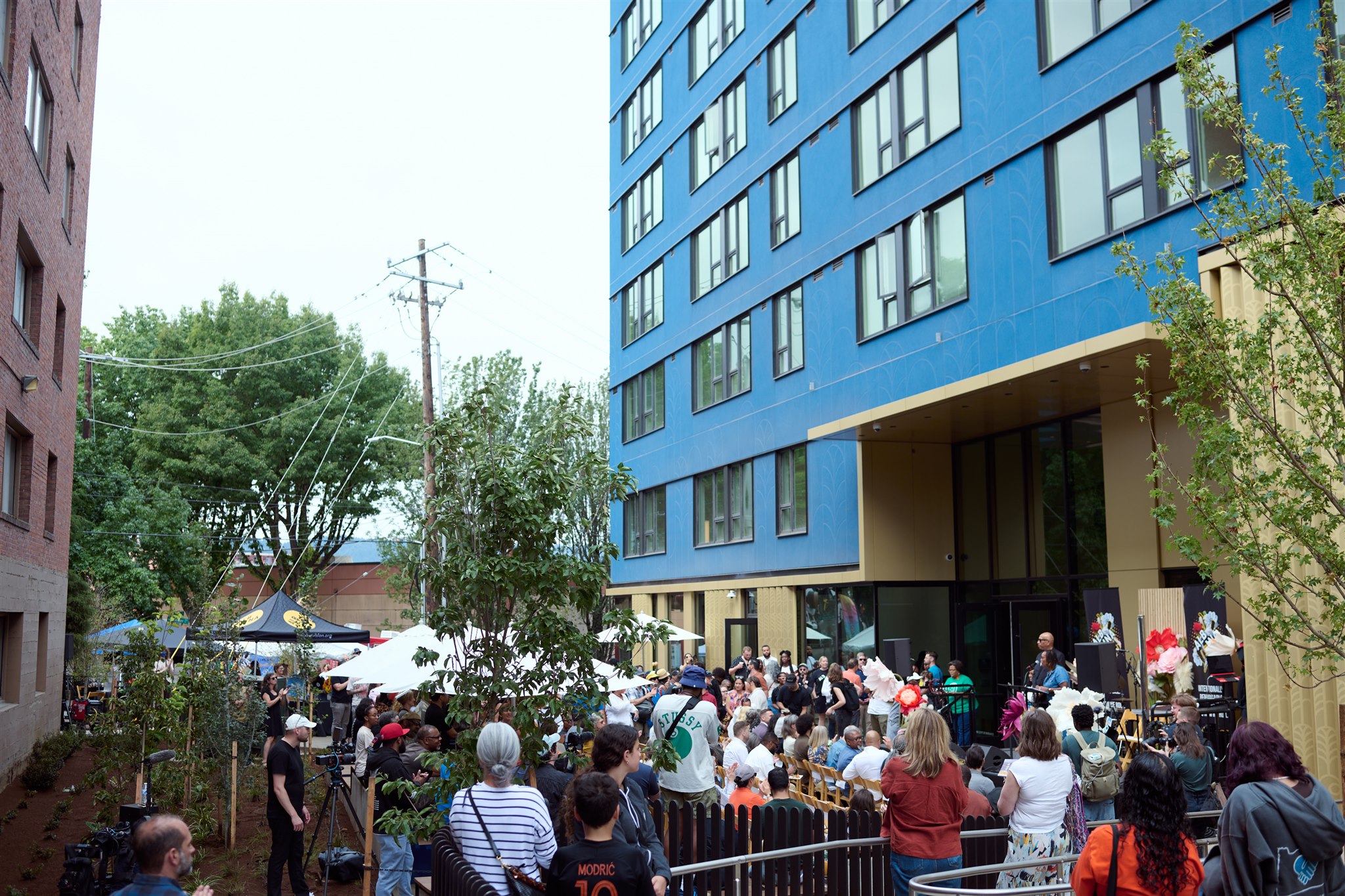
Photo: Jason Hill
Spanning nearly 100 acres, the project aims to heal historical injustices, addressing harms caused by decades of urban renewal policies that displaced families and decimated the once-thriving community. The project will create more than 1,000 units of family-centered, affordable housing as well as economic, educational, cultural and recreational opportunities.
This fall, hundreds of people gathered to commemorate a significant project milestone, the grand opening of Albina One, a 94-unit affordable housing community that features communal spaces and resident services and programming. The building is nearly half leased, with preference given to displaced or longtime residents of North/Northeast Portland. Albina One is welcoming families back to the district for the first time in 40 years.
Portland Opportunities Industrialization Center (POIC) — a 50-year-old nonprofit that works to empower individuals, youth and families through education, employment support and leadership development — oversees resident services and programming. Our grant helps to fund services and programming, which aim to promote resident safety and well-being, foster housing stability and cultivate a sense of belonging.
To date, programming has largely focused on community building. Albina One’s resident-services coordinator hosts regular meet-and-greet events for residents in the community kitchen. Residents also have access to a bilingual (Spanish and English) personal health navigator who helps them understand their health insurance benefits, among other complex issues.
POIC is partnering with community organizations and health care providers to develop additional onsite programming, such as a women’s support group, nutrition and cooking classes, dance classes and sessions on opportunities in higher education.
“This affordable housing development is way more than just 94 units of housing. It is being built around community care. The grant from CareOregon really embodies so much of that focus,” said Donovan Scribes, a spokesman for The Albina Vision Trust.
United Way of Jackson County: Access to care
In many parts of the state, limited public transportation makes it hard for Oregonians to get to work, medical appointments, childcare and other important destinations. This issue is particularly pronounced in rural areas, where residents often travel long distances to reach their destination.
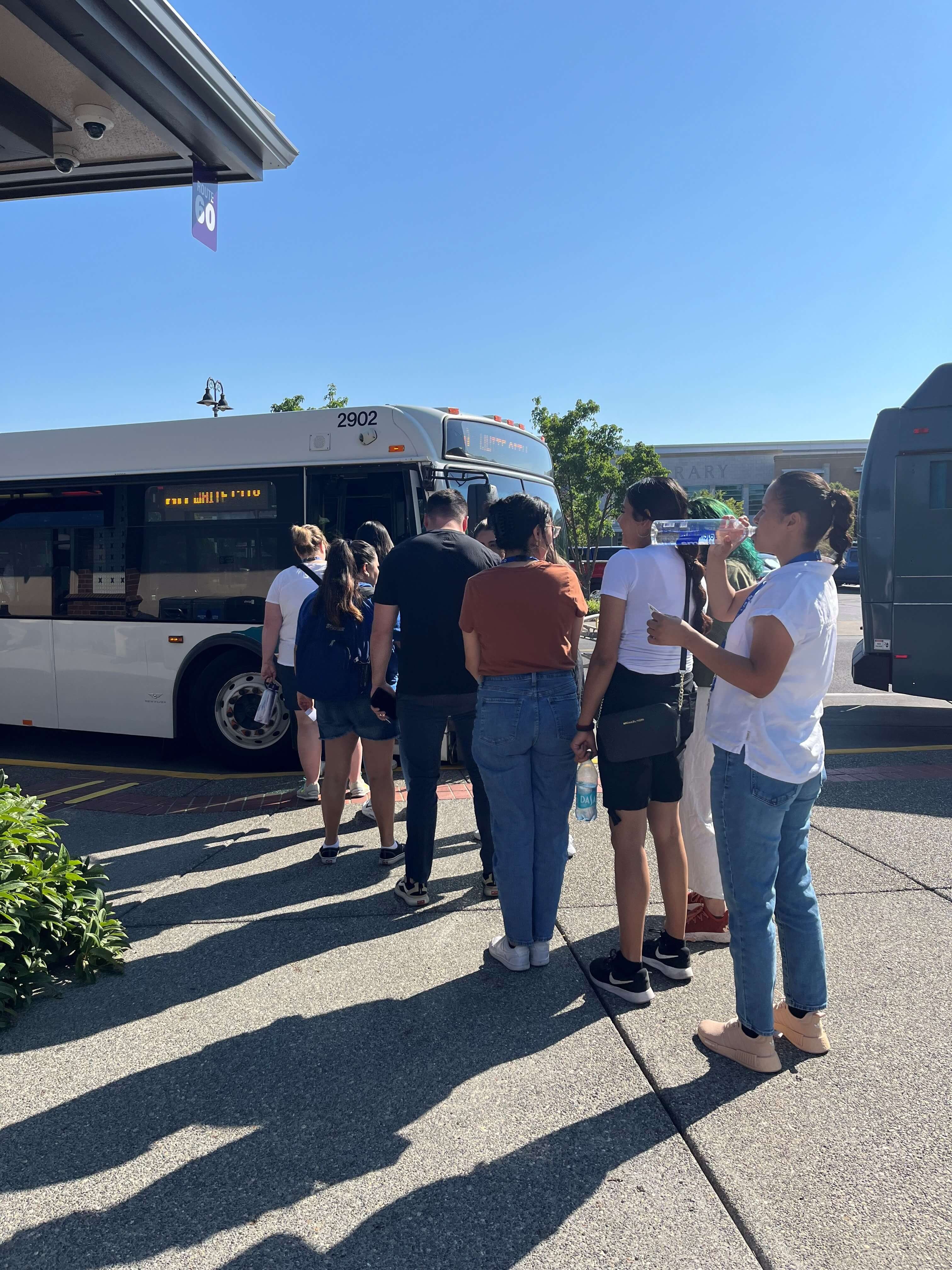
To improve access to care in rural Jackson County, CareOregon awarded a grant to United Way of Jackson County for transportation resources, including travel training, free bus passes, paratransit services, wheelchair charging stations and a program that helps residents find alternative modes of transportation (such as carpooling). United Way of Jackson County is a longtime community partner of Jackson Care Connect CCO, which is part of the CareOregon family.
The CareOregon grant, for instance, funds an expansion of United Way’s travel-training program, which helps first-time bus riders learn to navigate the system in a manner that best suits their needs. The one-on-one training is available online, by phone or in person – and, thanks to CareOregon funding, it’s offered in English or Spanish. Travel trainers sometimes meet community members for an inaugural bus ride, a real-world experience that helps build confidence and calm nerves.
United Way is collaborating with local health care providers and community based organizations to identify residents who need help with transportation, including those affected by recent reductions in bus service.
“It can be difficult to secure grant funding for transportation. So, this is a big deal for us. We’re grateful to CareOregon for recognizing how important it is to address isolation in our community and help ensure people can get to grocery stores, medical appointments and the other places they need to go,” said Dee Anne Everson, Chief Executive Officer of United Way of Jackson County.
All 2025 grant recipients
Access to affordable housing
- The Albina Vision Trust (Multnomah County)
Funds services and programming to promote safety, well-being, housing stability and a sense of belonging for residents of Albina One, a new affordable housing community.
- Just Compassion of East Washington County (Washington County)
Funds housing casing management or permanent supportive housing programs. Just Compassion supports adults and families as they re-enter stable housing and become financially self-sufficient.
- Project Patchwork (Clackamas County)
Funds a peer support specialist who works with 28 families a year, on average, in recovery transitional housing.
Access to care
- Autism Society (Jackson County)
Funds a pilot program to pay a community health worker to provide expanded support to Autistic individuals and families in need, in collaboration with local organizations.
- Clatskanie School District (Columbia County)
Funds a project to promote positive peer interactions. The project serves students, staff and the wider community, addressing mental health concerns and student resiliency.
- Mercy Flights (Jackson County)
Funds outreach and education efforts to support Mercy Flight’s in-home emergency care pilot program. Mercy Flights prioritizes access to care, particularly for underserved and/or rural communities.
- Muslim Educational Trust (Washington County)
Funds a 12-month, health-navigation program serving Oregon Health Plan-insured refugee, immigrant and Muslim families.
- Oregon Latino Health Coalition (Multnomah County)
Funds Lazos Comunitarios (Community Ties), a culturally specific health education and outreach program for Latinos in the Portland metro area.
- Rahab’s Sisters (Multnomah County)
Funds peer support, resource navigation, staff development and planning and infrastructure needs for holistic primary-care access for women and transgender and nonbinary individuals.
- Scappoose School District (Columbia County)
Funds school-based mental health service capacity. Students who lack health insurance, financial support or the means to get off-campus appointments can access care at school, helping to reduce health disparities.
- Todos Juntos (Clackamas County)
Funds a bilingual family-resources navigator in Sandy and Estcada, providing housing stability support and culturally responsive care navigation.
- Unite Oregon (Washington County)
Funds the expansion of culturally specific efforts to improve health literacy and access to care. Grant will support collaboration with culturally specific partners, a bilingual community health worker and language access.
- United Way of Jackson County (Jackson County)
Funds transportation resources for community members, including travel training, free bus passes, wheelchair charging stations, paratransit services and more.
- Us First Initiatives (Multnomah County)
Funds an expansion of peer-led care navigation, health literacy and housing support. UFI is a peer-run organization that prioritizes communities of color and people living with mental health and substance use disorder challenges.
Access to food
- Black Men’s Wellness (Multnomah County)
Funds a client-resource navigator for a targeted expansion of culturally specific nutrition education and OHP resource-navigation services for Black men and families in east Multnomah County.
- Bridging Cultures (Clackamas County)
Funds year-round, culturally specific food and nutrition-education programs, including a community garden, culturally specific cooking classes, farm outreach and more. Programming in English and Spanish.
- Greater Northwest Community Health Collective (Multnomah County)
Funds a six-week culturally specific nutrition-education program (three times per year) with a movement component for chronic condition management.
- Slavic Community Center of NW (Multnomah County)
Supports the launch of a culturally tailored nutrition-education program for the Slavic and Eastern European communities.
- Somali Oregon Service Center (Multnomah County)
Funds programs to provide healthy food; teach healthy habits and culturally relevant cooking skills; and offer workforce-training opportunities in the food sector.
Community Advisory Board-approved grants
- East Portland Collective (Multnomah County)
Through partnerships with volunteer artists, teachers and organizers, East Portland Collective offers free classes, workshops, entertainment and a space “just to be” for underserved and underrepresented community members.
- None Left Behind (Multnomah County)
None Left Behind is a Black-led, grassroots nonprofit serving Portland children and families who have been impacted by gun violence, parental separation, substance use disorder and trauma.
- St. John’s Food Share (Multnomah County)
Run entirely by volunteers, St. John’s Food Share distributes food through an open-door, no-barrier approach.
Investments in Action series
Our "Investments in Action" series highlights the transformative power of CareOregon's strategic investments in health and well-being. Through these stories, we explore how our support goes beyond traditional funding roles and is helping to close gaps in health care access and community services. Despite challenges within the Medicaid space, we remain committed to centering these important narratives of community strength and resilience.